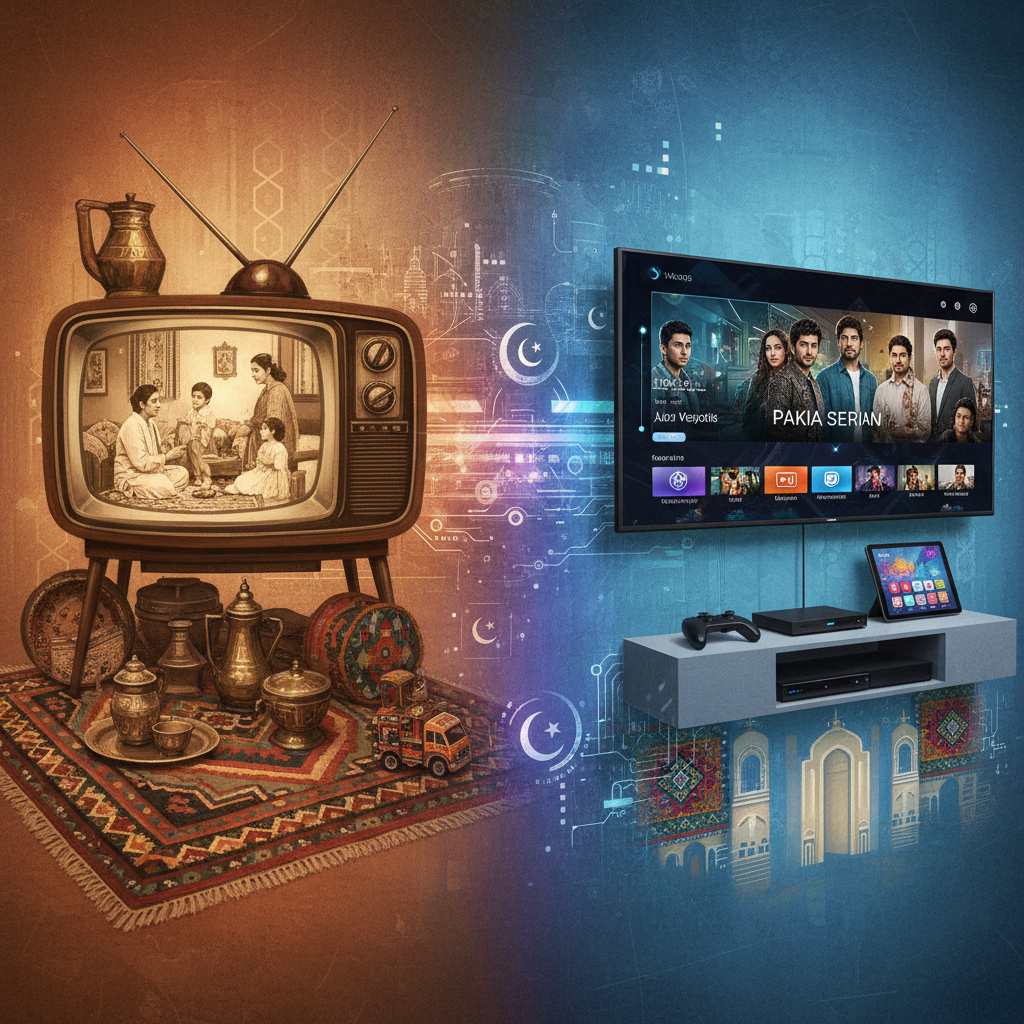
Every industry has its founding myths — the works that define what is possible and set the standard for everything that follows. For Pakistani television, those founding myths were written in the studios of Pakistan Television Corporation during the 1980s and early 1990s. Dramas like Dhoop Kinare, Tanhaiyaan, and Ankahi did not merely entertain; they established a storytelling tradition that continues to influence every serial produced today. Understanding these classics is essential for anyone who wants to appreciate why Pakistani dramas occupy a unique space in South Asian popular culture.
The PTV Monopoly: Constraint as Creative Fuel
It is difficult for younger viewers to imagine a time when Pakistan had only one television channel. PTV held a monopoly on broadcasting from its inception in 1964 until the early 2000s, when private channels began receiving licenses. Rather than stifling creativity, this monopoly paradoxically concentrated the country's finest writers, directors, and actors into a single ecosystem. There was no competition for eyeballs, which meant that creators could prioritize artistic ambition over commercial pressure. The result was a golden age of television that produced works of genuine literary merit.
Writers like Haseena Moin, Ashfaq Ahmed, and Bano Qudsia brought the sensibility of Urdu literature to the screen. Directors like Shoaib Mansoor and Sahira Kazmi developed a visual language that was distinctly Pakistani — intimate, dialogue-driven, and emotionally precise. And actors like Marina Khan, Shehnaz Sheikh, Rahat Kazmi, and Javed Sheikh became icons whose influence extends far beyond their era.
Dhoop Kinare (1987): The Drama That Defined Romance
If you ask any Pakistani over the age of forty to name the greatest drama ever made, the answer is almost always Dhoop Kinare. Written by Haseena Moin and directed by Sahira Kazmi, the serial starred Rahat Kazmi as Dr. Ahmer and Marina Khan as Dr. Zoya — two medical professionals whose slow-burning romance unfolds against the backdrop of a Karachi hospital. What made Dhoop Kinare revolutionary was its refusal to rely on melodrama. The love story developed through witty dialogue, professional respect, and genuine emotional connection rather than the tears and tantrums that characterized lesser productions.
The drama holds a 9.5 rating in the HumaraDrama database, and its influence is visible in virtually every medical or workplace romance that has followed. When modern dramas pair their leads in professional settings, they are consciously or unconsciously following the template that Dhoop Kinare established nearly four decades ago.
Tanhaiyaan (1985): Sisterhood and Independence
Tanhaiyaan, also written by Haseena Moin, told the story of two sisters — played by Marina Khan and Shehnaz Sheikh — who must rebuild their lives after the death of their father. The drama was groundbreaking in its portrayal of women as autonomous agents rather than passive victims of circumstance. Marina and Shehnaz's characters worked, made decisions, fell in love on their own terms, and faced consequences with dignity. For a generation of Pakistani women, Tanhaiyaan was not just entertainment — it was a mirror that reflected their aspirations.
The serial also introduced a lighter, more naturalistic acting style that broke from the theatrical traditions of earlier PTV productions. Marina Khan's spontaneous energy and Shehnaz Sheikh's composed elegance created an on-screen dynamic that audiences had never seen before. Their partnership remains the benchmark for female-led Pakistani dramas.
Ankahi (1982): The Art of the Unsaid
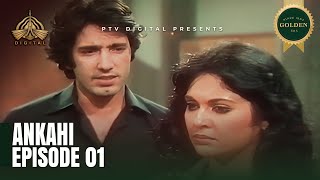
Ankahi — literally meaning "the unsaid" — starred Shehnaz Sheikh and Javed Sheikh in a drama that explored the spaces between words. Written by Haseena Moin (whose dominance of this era cannot be overstated), the serial dealt with misunderstandings, unspoken feelings, and the gap between what people mean and what they say. Its 9.3 rating on IMDB reflects a work that transcends its era and speaks to universal human experiences.
The Bridge to the Modern Era: Humsafar and Zindagi Gulzar Hai
The transition from PTV's golden age to the modern era of private channels was not immediate. The early 2000s saw an explosion of new channels — Hum TV launched in 2005, ARY Digital in 2000, and Geo TV in 2002 — but it took time for these networks to develop programming that matched PTV's artistic legacy. The breakthrough came with two dramas that are now considered modern classics in their own right.
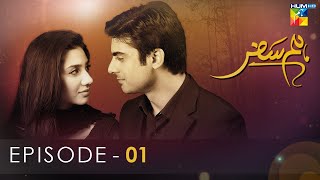
Humsafar, starring Fawad Khan and Mahira Khan, became a cultural phenomenon that transcended national borders. With a 9.5 rating in our database, it introduced Pakistani dramas to audiences in India, the Middle East, and Southeast Asia. The serial proved that the intimate, character-driven storytelling pioneered by PTV could thrive in the age of multiple channels and digital distribution.
Zindagi Gulzar Hai, also featuring Fawad Khan alongside Sanam Saeed, tackled class dynamics and female ambition with a sophistication that echoed the best PTV productions. Its 9.3 rating and enduring popularity — it remains one of the most-discussed Pakistani dramas on social media — demonstrate that quality storytelling creates lasting cultural impact.
What the Classics Teach Us
Watching PTV classics in 2026 is a revelatory experience. The production values are modest by today's standards — no sweeping drone shots, no elaborate set designs, no background scores drowning out dialogue. But the writing is extraordinary. Scenes breathe. Characters develop through conversation rather than confrontation. And the acting relies on subtlety rather than volume.
These qualities are not merely nostalgic preferences. They represent a storytelling philosophy that the best contemporary dramas — from Ishq Murshid to Muamma — continue to draw upon. The golden era of PTV did not end; it evolved. Its DNA is present in every Pakistani drama that chooses depth over spectacle, character over plot, and emotion over sensation.
Where to Watch
Many PTV classics are available on YouTube, though the video quality varies. The HumaraDrama database catalogues dramas from as far back as 1974, including PTV productions that are difficult to find elsewhere. For viewers who want to understand the roots of Pakistani television, these classics are not optional viewing — they are essential.
The HumaraDrama database currently tracks over 1,096 dramas spanning from 1974 to 2026, including 50 productions from PTV and PTV Home that represent the foundation of Pakistani television.